Inner & Outer States

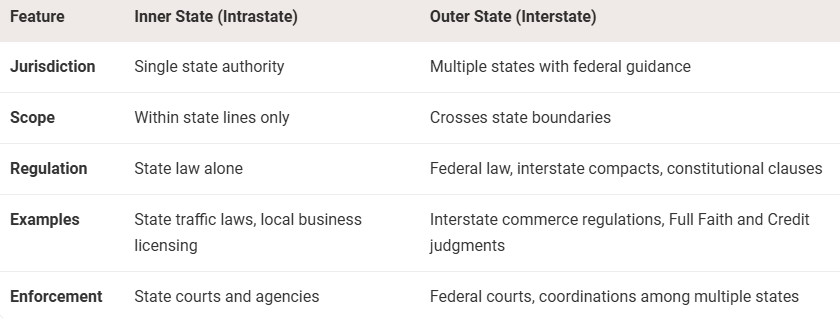
legal terms, “inner” states (intrastate) refer to the authority and activities confined within single state’s borders, while “outer” states (interstate) concern interactions or regulations that cross state lines or involve multiple states.

Inner States (Intrastate)

  • Transportation or commerce conducted solely within one state (intrastate trucking or shipping)
  • Enforcement of state criminal or civil law within its territory
  • Licensing, permits, and employment law that apply only to residents or businesses inside the state

Outer States (Interstate)

  • Transportation of goods or passengers across state borders (interstate commerce)
  • Recognition of court judgments and public records from other states (Full Faith and Credit Clause)
  • Extradition of fugitives from one state to another
  • Collaborative arrangements, like water rights agreements or regional planning projects, across multiple states

Distinction and Legal Implications

image.png

Understanding whether matter is intrastate or interstate impacts which laws apply, which courts have authority, and which agencies can enforce regulations  Misclassifying the state scope can lead to conflicts between federal and state law, or between different state laws  In summary, inner states pertain to purely local jurisdiction and sovereignty, while outer states involve cross-border interactions requiring compliance between multiple states and often federal oversightforming foundational distinction in U.S. law and governance.

image%20%281%29.png image%20%282%29.png

VIDEOS: 

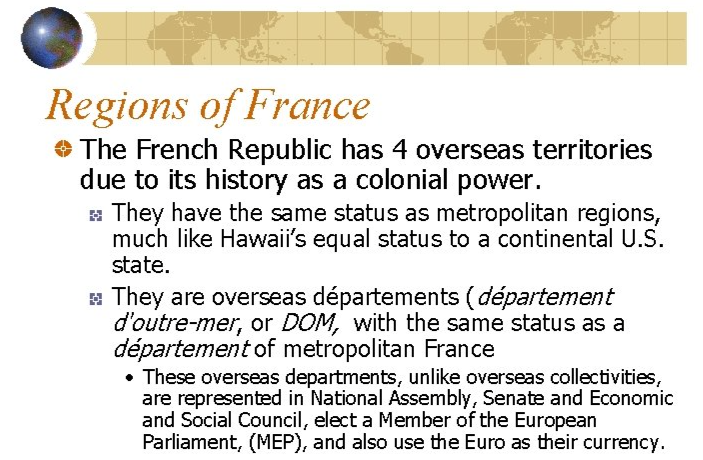
Did You Know That France...  🇫🇷 #shorts #geography #maps #france
France Still Has An Empire

French Overseas Regions and Territories Explained

» The L.A.W. of the Empire of Morocco